

Field Trips, Team Parties, and Fundraisers: How Group Events Work at a Trampoline Park
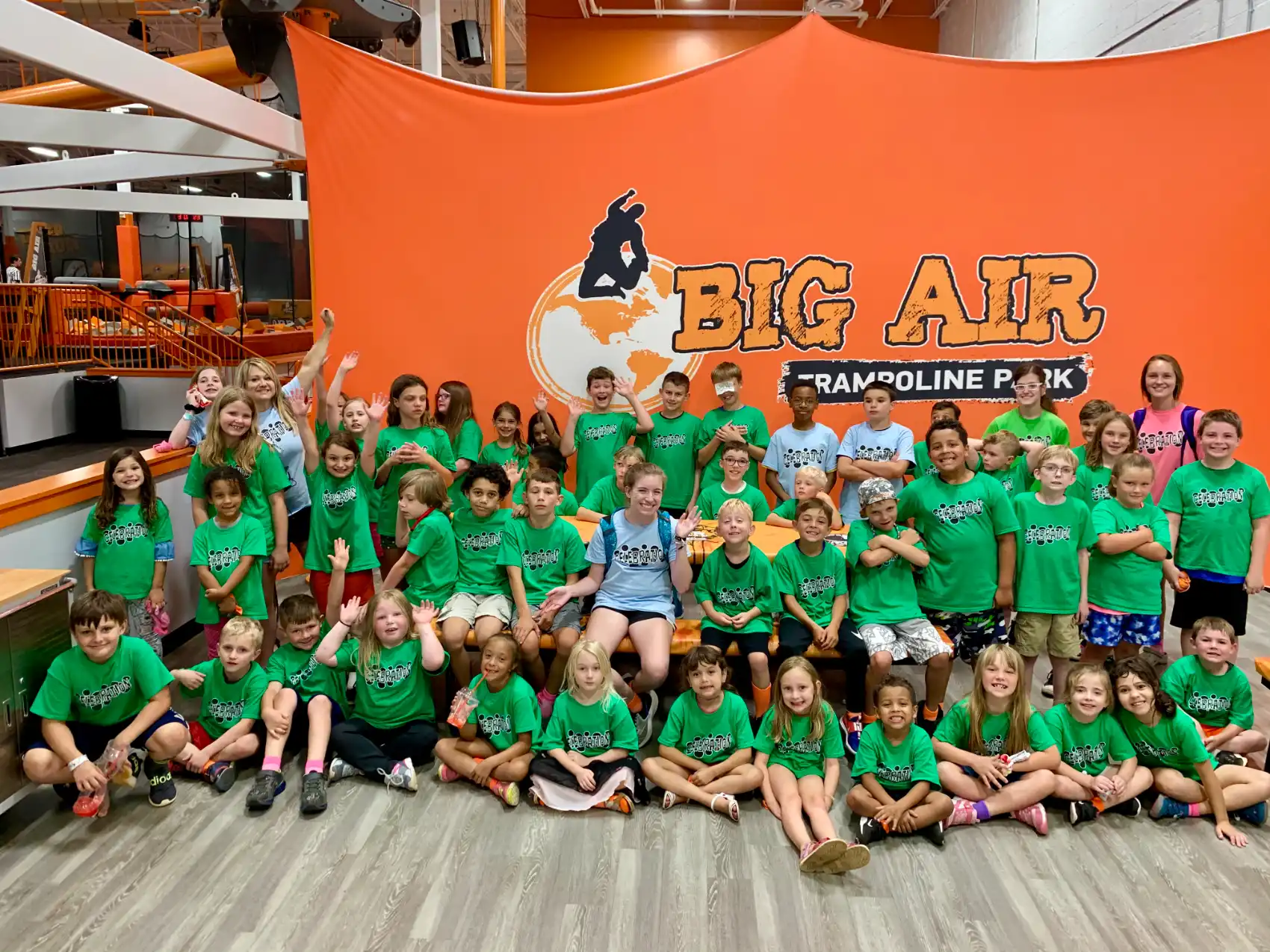
Anyone who has organized a group outing knows the real job isn't picking the place. It's the seventeen small logistics that come after: the headcount that keeps changing, the kid with the allergy, the parent who shows up with two extra siblings, the bus that arrives twenty minutes early.
Good group venues absorb that chaos for you. Bad ones hand it right back.
Trampoline parks are quietly one of the best group venues going, and not just for birthdays. Here's how field trips, team parties, youth group nights, fundraisers, and company outings actually work at a park like Big Air, and what to sort out before you book.
WHY TRAMPOLINE PARKS WORK FOR GROUPS
A few structural things make a trampoline park easier to run a group through than a pool, a park, or a pizza place.
Everyone is doing something the whole time. There's no waiting for a lane or taking turns on one attraction. A group of 30 spreads across the main court, dodgeball, the ninja course, and the foam pit and stays busy for the entire session. Browse the full attractions lineup to see what your local park runs.
Mixed ages sort themselves out. Dedicated zones like Lil Air keep the under six crowd in their own space, so a group with younger siblings doesn't leave the little ones standing around.
Weather is irrelevant. The field trip you booked in February happens in February. Nobody watches a forecast.
Supervision is built in. Safety trained team members work the courts, and the layout gives chaperones sightlines to the whole group from one spot. Adults who aren't jumping don't pay a thing, since spectators are always free.
FIELD TRIPS AND SCHOOL GROUPS
Weekday mornings and early afternoons are the quietest hours at most parks, which means school groups often get the courts largely to themselves. That timing is exactly when field trips happen anyway.
Teachers and organizers, the two things to handle in advance are the headcount and the waivers. Every jumper needs a signed liability waiver, and anyone under 18 needs a parent or guardian signature. The fix is simple: get the waiver link from your park and send it home with permission slips a week or two ahead. Waivers are good for a full year, so students who have visited before may already be covered.
And if you need to justify the trip on paper, two hours of climbing, jumping, and obstacle courses is gross motor development and physical education by any honest definition. It just doesn't feel like it to the kids.
SPORTS TEAM PARTIES
End of season parties have a familiar problem: the venue is usually built around sitting, and you're bringing a group of kids selected specifically for not sitting.
A trampoline park flips that. The team burns energy together, and trampoline dodgeball gives them one more game to play as a team, win, and argue about happily in the group chat. If your crew takes their dodgeball seriously, read our guide to trampoline dodgeball rules and tips before you come. Pizza from the park kitchen afterward closes it out, and nobody's living room gets destroyed.
YOUTH GROUPS, SCOUTS, AND CHURCH GROUPS
Evening slots work well for youth groups, and for the middle school crowd specifically, ask your park about Cosmic Nights. It's the weekend evening session with music, lasers, and lowered lighting, and it's one of the few organized activities that 11 to 14 year olds will admit out loud that they want to attend. Youth leaders get a contained venue, built in supervision, and a group of tired kids at pickup.
FUNDRAISER NIGHTS
Many parks partner with schools, teams, and community organizations on fundraiser events, where a portion of the night's proceeds goes back to your organization. The formats and details vary by location, so this one is a phone call: ask your local park what fundraising options they run and what they need from you. What your side of the table looks like is mostly promotion, getting families to show up on your night.
Compared to selling wrapping paper, a fundraiser where the product is two hours of jumping tends to be an easier pitch.
CORPORATE AND TEAM OUTINGS
Adult groups book trampoline parks for the same reason kids' groups do, plus one more: it levels the playing field. Your most athletic coworker and your most sedentary one have roughly the same advantage on a trampoline, which makes it a rare team activity where nobody dominates and nobody hides. It beats a whiteboard and a trust fall.
HOW BOOKING ACTUALLY WORKS
Group bookings run through your local park, and the packages look a lot like the party packages: jump time for your group, a reserved area with seating, food and drinks from the park kitchen, and a host or point person on the park side. For big events, many parks offer private buyouts that can handle groups of up to 300.
What the park will ask you: roughly how many jumpers, the age range, your date and time window, and what food you want. What you should ask the park: group rates for your size, waiver logistics, and whether your date has other large groups booked.
Pricing varies by park and group size, so check your park's pricing page for the baseline and call for a group quote.
THE ORGANIZER'S CHECKLIST
A short list that prevents most day of headaches:
- Send the waiver link out one to two weeks ahead, with the reminder that a parent must sign for anyone under 18.
- Confirm your headcount two or three days out, and tell the park about any allergies with the food order.
- Remind everyone to wear athletic clothes. Grip socks are required to jump and are available at the front desk.
- Assign one adult as the wrangler whose only job is knowing where the group is.
- Arrive 15 to 20 minutes early so check in doesn't eat into jump time.
HOW MANY PEOPLE DO YOU NEED FOR A GROUP EVENT?
It varies by park, but if you're bringing ten or more jumpers it's worth calling ahead for group options rather than paying walk in admission. Larger groups unlock reserved areas and food packages.
DO CHAPERONES AND PARENTS HAVE TO PAY?
No. Spectators are free at every Big Air park. Adults only pay if they want to jump, and honestly, some of them will.
HOW FAR AHEAD SHOULD YOU BOOK?
Two to three weeks ahead is comfortable for most group sizes. Spring and early summer weekends fill fastest, and private buyouts need more lead time. Weekday field trip slots are the most flexible.
CAN YOU BRING YOUR OWN FOOD?
Food and drinks come from the park's own kitchen as part of your package, which is one less vendor for you to manage. Outside cake is allowed for celebrations at most parks. Check your location's policy when you book.
READY TO PLAN YOUR GROUP EVENT?
Find your nearest Big Air location and give the park a call with your headcount and date. Whether it's a field trip, a team party, a youth night, or a fundraiser, the park team will walk you through the package that fits. You handle the guest list. They'll handle everything else.