

Indoor Activities for Kids: What Actually Works When You Are Stuck Inside
There is a particular kind of morning every parent knows. It is raining, or it is far too hot, or the school calendar has produced a day off that nobody planned for, and there is a child in front of you with a full tank of energy and nowhere to put it.
The internet is full of lists that answer this with forty craft ideas. Most of those ideas buy you eleven minutes and leave you with glitter in the carpet. So here is a more honest version: what actually holds a child's attention indoors, roughly how long each option lasts, and what it costs if you decide the house is not going to cut it today.
Start with the real question: how many hours are you filling?
This is the part most lists skip, and it is the only thing that matters. A two hour gap before dinner is a completely different problem from a full day with no plan.
If you have one or two hours, staying home is usually fine. Pick one activity, commit to it, and accept that it will end. If you are looking at five or more hours, home almost never works, and trying to make it work is how everyone ends up miserable by two in the afternoon. Leaving the house is not a failure of imagination. It is the correct call.
Be honest with yourself about which one you are in before you start planning, because the answer changes everything below.
What works at home, and how long each one really lasts
These are ordered by how much time they genuinely buy, not by how good they look written down.
Building something large. Blanket forts, cardboard box projects, anything that takes over a room. Realistically forty five minutes to two hours, and it scales with how much you let them take over. The mess is real but it is a one time cleanup rather than a running battle.
Baking. Forty minutes of genuine engagement plus something to eat at the end. Works best with children old enough to measure, which is roughly five and up. Below that you are doing the baking and they are watching.
An obstacle course through the house. Cushions, tape on the floor, a timer. Twenty to thirty minutes, and it burns actual energy, which most indoor activities do not. Worth it for that reason alone.
A movie. Ninety minutes to two hours of quiet. Nobody needs permission to use this one. It just does not work twice in the same day.
Crafts. Honestly, fifteen minutes. Sometimes less. Useful as a gap filler, not as a plan.
Add those up and a strong day at home gets you to about four hours with a lot of parental effort. That is the ceiling, and it is why the second half of this guide exists.
When the house has run out of ideas
Every town has more indoor options than people remember in the moment. Here is what each one is actually good for.
The library. Free, and better than its reputation. Many run story times and craft sessions on a schedule, and the children's section is usually built for exactly this. Good for an hour, sometimes two. Not a place for a child who needs to run.
Museums and science centres. Two to three hours, genuinely engaging, and often the best value if your town has one. Admission varies enormously by city. The catch is that the good ones are busy on exactly the days you want to go.
Indoor playgrounds and soft play. Built for under sevens. Excellent for toddlers and early primary ages, and most have somewhere for a parent to sit down with a coffee, which should not be underrated. Older children get bored quickly.
Swimming pools. Reliable energy burn, year round, and cheap at most public pools. The overhead is the packing, the changing and the wet everything afterwards. Budget an extra forty minutes of logistics around the actual swimming.
Bowling and arcades. An hour or two, works across a wide age range, and teenagers will tolerate it. Costs add up faster than you expect once the arcade games start.
Cinemas. Two hours of guaranteed quiet. It is also two hours of sitting still, so it pairs badly with a child who has already been inside all morning.
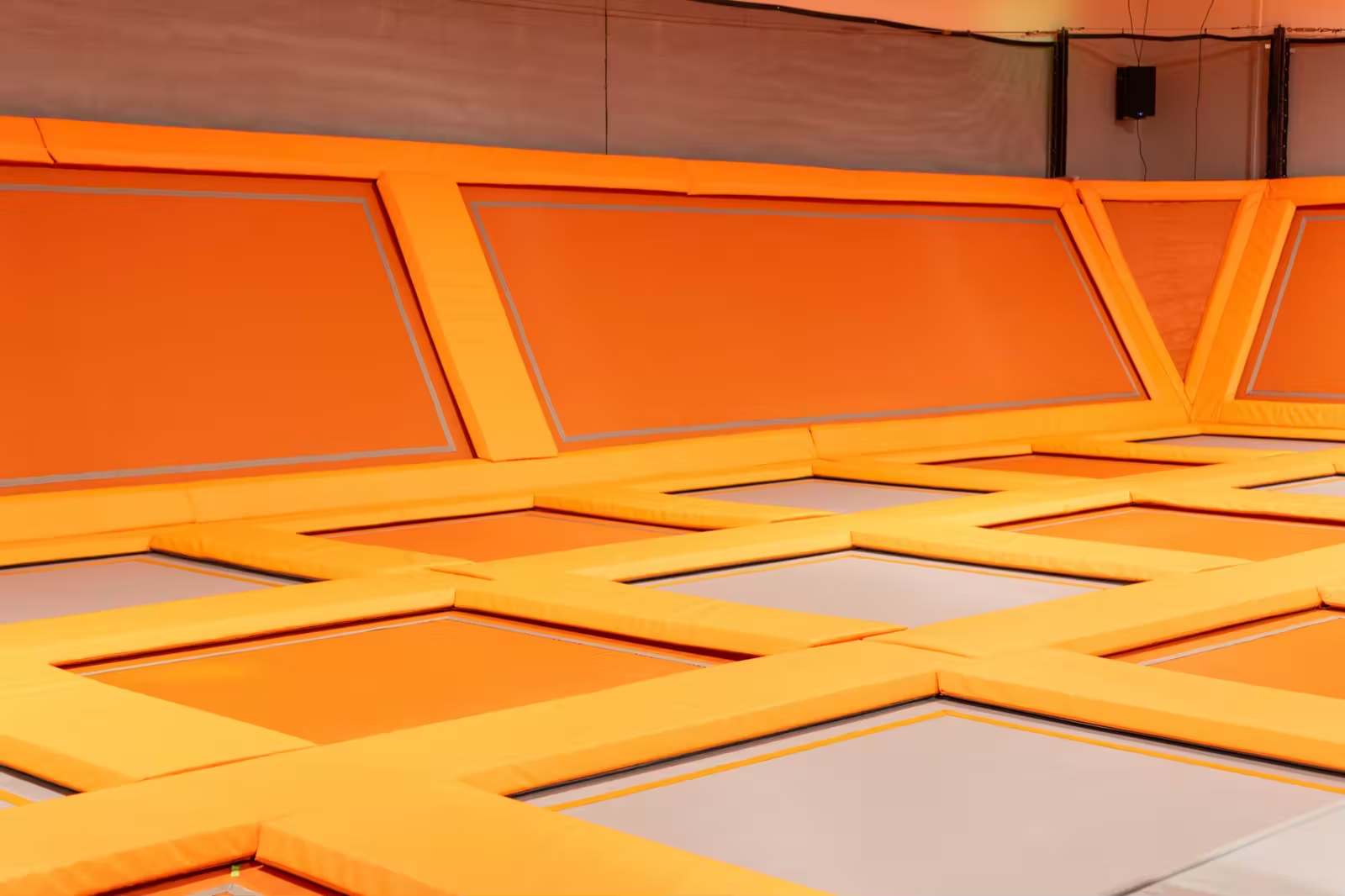
Trampoline parks. Two to three hours, and the only option on this list built specifically around burning a lot of energy indoors. Covered properly in the next section, since this is our corner of the world and we would rather be straight with you about it.
What a trampoline park visit is actually like
We run about thirty of these, so treat the following as informed rather than neutral. We have tried to keep it honest either way.
The thing a trampoline park does that nothing else on this list does is exhaust a child on purpose. That is the entire product. If your problem is a nine year old who has been vibrating since seven in the morning, this solves it in a way that a museum does not.
It is loud, and it is busy at weekends. If you or your child find crowds difficult, a weekday morning is a completely different experience from a Saturday afternoon, and it is worth planning around that.
Most parks now have more than trampolines. Ninja courses, climbing walls, foam pits, dedicated toddler areas and arcade sections are common, though the exact mix varies by location. If a specific attraction matters to you, check your local park's attractions page before you drive over, because no two parks are identical.
Age wise, it works from about two upwards, but toddlers and older children want different things. Many parks run separate quieter sessions for little ones, which is a much better experience than putting a two year old on a busy open court.
What an indoor day out actually costs
Nobody puts this in a list of indoor activity ideas, which is strange, because it is the deciding factor most mornings.
Libraries are free. Public swimming is usually the cheapest paid option. Museums and science centres vary so much by city that a range would be meaningless. Cinemas, bowling and trampoline parks sit in broadly similar territory per child.
For our parks specifically, a one hour jump pass generally runs about eighteen to twenty four dollars, ninety minutes about twenty two to twenty nine, two hours about twenty six to thirty four, and all day passes from about twenty six up to the mid forties at the parks that offer them. Prices differ by location, so your local pricing page is the number that counts.
Two things worth knowing before you arrive anywhere, because they catch people out. Grip socks are usually required and usually not included in the ticket price, so expect a few dollars more per person unless you bring a pair you already own. And at our parks, adults who are only watching do not pay. If you are jumping too, you are a jumper.
Choosing by age, quickly
Under five. Soft play, library story time, a pool with a shallow area, or a dedicated toddler session somewhere quieter. Avoid anything built for big kids during peak hours.
Five to nine. The easiest age to please and the hardest to tire out. Trampoline parks, science centres and swimming all land well. This is the group that most needs the energy burn.
Ten and up. They want to be with friends more than they want a specific activity. Bowling, arcades and trampoline parks work because they are social. Anything that feels aimed at little kids will be rejected on sight.
Mixed ages in one trip. Go somewhere with more than one thing to do, so the six year old and the twelve year old are not forced into the same activity. This is the main argument for the larger venues over the single purpose ones.
The mistake that ruins most indoor outings
Going at the wrong time.
Every indoor venue in your town is busiest on a rainy weekend afternoon, because every other parent had the same thought at the same moment. The same venue on a weekday morning, or in the first hour after opening, is calmer, cheaper in some cases, and a far better experience for a child who is easily overwhelmed.
If you have any flexibility at all, use it. It is the single highest impact decision you will make, and it costs nothing.
Questions parents ask
What can I do with kids indoors that is free?
Libraries are the strongest free option, and many run scheduled children's programming. Beyond that, a serious fort build or a house obstacle course costs nothing and burns more energy than most paid activities.
How do I keep a very energetic child busy indoors?
Accept that quiet activities will not work, and plan around movement instead. An obstacle course at home, a pool, or a trampoline park are the three things that reliably burn energy without going outside.
What indoor activities work for a toddler and an older child at the same time?
Pick a venue with separate zones rather than a single activity. Many trampoline parks and larger indoor play centres have a dedicated toddler area alongside the main attractions, which lets both children do something age appropriate in the same building.
Do I have to pay if I am only supervising?
At our parks, no. Spectators who stay off the equipment are free. Policies differ elsewhere, so it is worth asking when you book.
How long should I plan for?
Two hours is the sweet spot for most indoor outings. Long enough to be worth the trip, short enough to leave before anyone melts down. All day passes make sense mainly when you are planning to break the visit up with food.
Planning an indoor day
If a trampoline park is on your shortlist, check your local park's pricing and hours first, then read plan a visit for the practical details like waivers and socks, which are the two things that slow families down at the front desk.
If you have a younger one, our guide to trampoline parks with a toddler covers the quieter sessions and how to make a first visit go well. If everyone is older, can adults go to a trampoline park answers the question teenagers and parents both quietly have.
And if the day you are filling happens to be near a birthday, birthday packages shows what is included, and our step by step birthday planning guide walks through the rest.