

Winter Break Activities for Kids: How to Get Through Two Weeks Off
Winter break looks generous on the school calendar. Two weeks off, the holidays in the middle, everyone home together. Then the second morning arrives, the presents have lost their shine, it is cold or wet outside, and you realize there are eleven more days to fill.
This is a practical guide to getting through it. Not forty craft ideas, but a plan for how the break actually goes, which days are hardest, what works indoors when the weather will not cooperate, and what it costs to get everyone out of the house.
Winter break is not one long holiday. It is three different weeks.
The most useful thing you can do is stop thinking of the break as one block. It almost always splits into three parts, and each needs a different plan.
The run up. The first few days after school lets out, before the holidays themselves. Kids are wired, the house is busy with preparation, and you probably still have things to get done. This is when you need activities that run without you.
The holidays themselves. Usually the easiest stretch. Family, food, new toys and a schedule that mostly fills itself. Do not overplan these days.
The dead zone. The days between the holidays and New Year, and the few days after it before school starts again. This is the hard part. The novelty is gone, relatives have gone home, routines have collapsed and everyone is a little stir crazy. If you only plan one part of winter break properly, plan this one.
Why winter break is harder than summer
Summer is longer, but winter break is often more difficult, for a few reasons that are worth naming.
The weather takes the easy options away. In summer the default answer is the park, the pool or the backyard. In December and January, depending on where you live, those can be off the table for days at a time.
The days are short. When it is dark by late afternoon, the stretch between lunch and dinner feels endless, and that is exactly when energy peaks and patience runs out.
Routines disappear all at once. Late nights, irregular meals and too much sugar add up, and by the second week most kids are running on a mix of excitement and exhaustion. A predictable plan for each day helps more than any single activity.
What works at home
Home can carry a good part of the break, as long as you are realistic about how long each thing lasts.
A big shared project. A puzzle that lives on the table all week, a cardboard city, a holiday baking day. These are the best value at home because they can be picked up and put down over several days instead of being used up in one sitting.
Putting the new stuff to work. New games and toys buy real time, but only if someone sits down and gets them going. Twenty minutes of your help on the first day can turn a gift into a week of independent play.
Movie afternoons. Ninety minutes of calm, and very useful in the dark late afternoon slot. They just do not work twice a day.
Something physical. A living room obstacle course, a dance party or a family workout video. Short, usually twenty to thirty minutes, but it burns the kind of energy that otherwise comes out as fighting.
The honest ceiling is that a strong home day gets you to about four hours of real engagement, and that takes effort. By the dead zone, most families need to get out.
Getting out of the house when it is cold outside
Most towns have more indoor options than people remember in the moment. Here is what each is good for during winter break specifically.
Libraries. Free, warm and often running special winter programs while school is out. Good for an hour or two, and a great reset on a low energy day.
Museums and science centers. Engaging for two to three hours. Expect them to be busier than usual during the break, so early in the day is your friend.
Ice skating. Seasonal, fun and a real energy burn for kids old enough to stay upright. Younger kids tend to last less time than you would expect.
Movie theaters. Two hours of quiet, and studios release big family films around the holidays. The downside is two more hours of sitting still.
Bowling and arcades. Work across a wide age range, including teenagers. Arcade spending adds up quickly, so set a budget before you walk in.
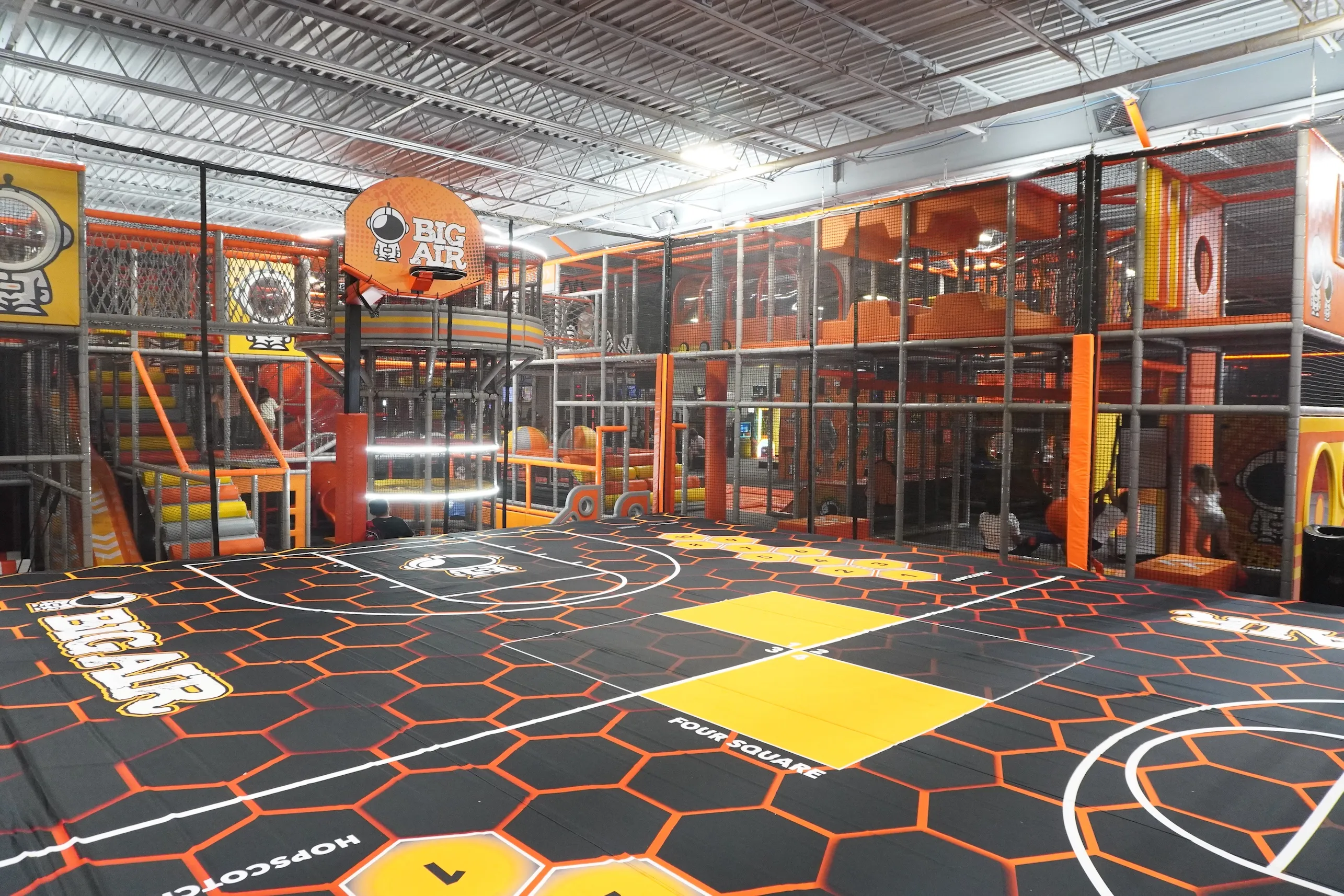
Trampoline and adventure parks. Built specifically for burning a lot of energy indoors, which is the exact problem winter break creates. More on what that looks like below.
What a trampoline park day looks like over the break
We run about thirty of these, so read this as informed rather than neutral. We have tried to keep it honest either way.
The reason families come to us during winter break is simple. Two hours of jumping, climbing and running does something a museum cannot. Kids come home tired in the good way, and the evening goes a lot more smoothly.
Our parks have more than trampolines. Depending on the location, you will find ninja courses, climbing walls, dodgeball courts, foam pits and trampolines set aside for kids 6 and under. The mix varies by park, so check the attractions page before you head over if there is something specific your kids want to do.
A few tips specific to the break:
- Go early on weekdays. Winter break turns every weekday into something closer to a weekend. The first hours after opening are usually the calmest.
- Check holiday hours before you leave. Hours can change around the holidays, so look at your local park's page on the day you plan to go.
- Sign the waiver at home. Every jumper needs one, and anyone under 18 needs a parent or guardian to sign. Doing it before you arrive saves a line at the front desk on the busiest days of the year.
- Bring grip socks or plan to buy them. They are required to jump and are not included in admission. You can buy Air Socks at the park or bring your own full coverage grip socks.
- Little ones have their own time. Many parks run Toddler Time sessions for younger kids, which is a much better experience than a packed open court during peak break hours.
- Older kids and teens. At parks that run it, Cosmic Night, with the lights down and the music up, is a good option for the age group that thinks it is too old for everything else.
Parents do not have to jump. Spectators are free, and plenty of parents spend the visit with a coffee and a phone that finally has some battery left.
What it costs
Budget is usually the deciding factor in the dead zone, when you might be planning several outings in one week.
Libraries are free. Museums vary a lot by city. Movies, bowling and skating tend to land somewhere in the range of a typical family outing, with food and extras on top.
Trampoline park passes are sold by time. Across our parks, a short pass of about an hour usually starts around twenty dollars, and longer and all day passes mostly land in the thirties. Prices vary by location, so check our pricing page for your local park. Remember to add grip socks if you do not already have a pair.
If you expect to come back more than a couple of times over the break and into the new year, it is worth doing the math on a membership. We wrote up how to work out whether a membership is worth it, and the answer depends on how often your family actually goes.
A simple plan for the hardest week
If the dead zone is the part you are dreading, here is a structure that works for a lot of families. One outing a day, planned the night before, with a calm afternoon after it.
- Morning: the active outing, early, before places get busy. This is when energy is highest.
- Lunch: at home, or somewhere simple.
- Afternoon: something quiet. A movie, the shared puzzle, the new games.
- Late afternoon: a short burst of something physical before dinner, even ten minutes outside if the weather allows it.
Mix free days with paid ones. A library morning one day and a trampoline park morning the next keeps costs down without the week feeling repetitive.
Frequently asked questions
When is winter break?
It depends on your school district, but most run about two weeks across the end of December and the start of January. Check your district calendar, because start and end dates vary more than people expect.
What are good winter break activities for toddlers?
Short and close to home works best. Library story times, indoor playgrounds and a Toddler Time session at a trampoline park, where the space is set up for little ones, are all good picks. Plan around naps rather than fighting them.
What can teenagers do over winter break?
Teens usually want something social. Bowling, ice skating, movies and Cosmic Night at parks that offer it all work, especially if they can bring friends.
Are trampoline parks busy over winter break?
Busier than a normal school week, yes. Weekday mornings right after opening are usually the calmest time to go.
Do parents have to jump?
No. Spectators are free, so you can watch, take photos or sit with a coffee.
Plan your visit
If a trampoline park is on your winter break list, a little planning makes the day smoother. Check pricing for your local park, read how to plan a visit, and look at the attractions so your kids know what is waiting for them. If a birthday falls over the break, our birthday parties take the hosting off your plate.
A few more reads for the break: indoor activities for kids that actually work, what to wear to a trampoline park, and what Cosmic Night is.